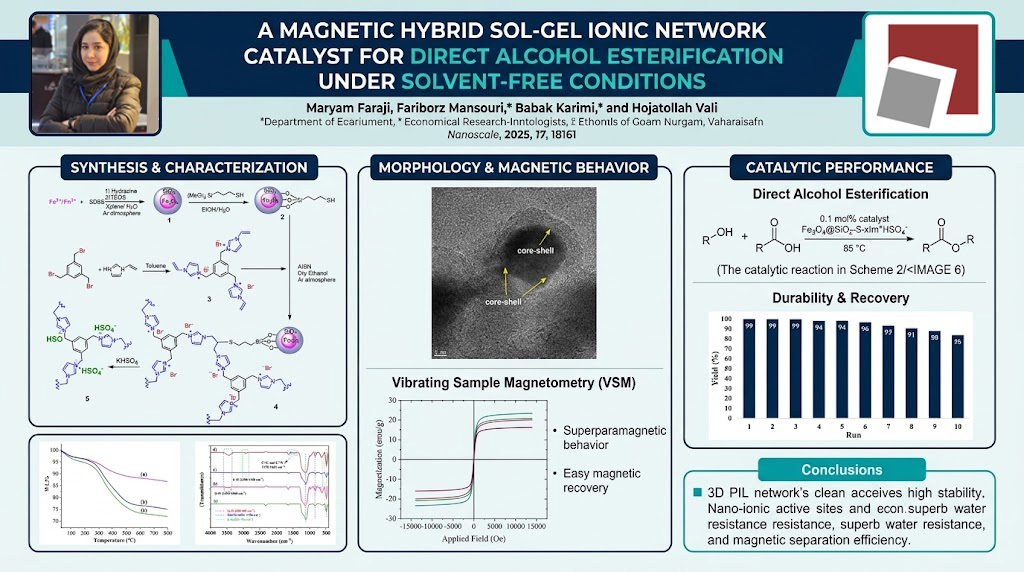
New generation of recyclable interconnected magnetic nanocatalysts (MINN) developed for high-yield equilibrium reactions
Researchers at IASBS have engineered a recoverable acidic nanocatalyst comprising interconnected magnetic nanoparticles (MINN), enabling direct esterification reactions under entirely solvent-free conditions. This innovative achievement, offering exceptional yields of up to 99% and repeated recovery using a magnet, has been featured in a themed collection of the leading journals Nanoscale and Nanoscale Advances, published by the UK’s Royal Society of Chemistry (RSC).

Agave plant and its flowering at IASBS Department of Physics
In the green atrium of the Department of Physics at the Institute for Advanced Studies in Basic Sciences (IASBS), where light falls from the glass ceiling and the quiet of the environment resonates with the sound of water, a silent and steadfast plant has taken root for many years. The plant is called agave, and its story extends from ancient history to the present day, gaining meaning along the way.

Admission of gifted students without entrance exam for October 2026
The Institute for Advanced Studies in Basic Sciences (IASBS) has announced its intention to admit students, in accordance with the regulations for providing facilities to scientific elites for entry into higher education programmes.
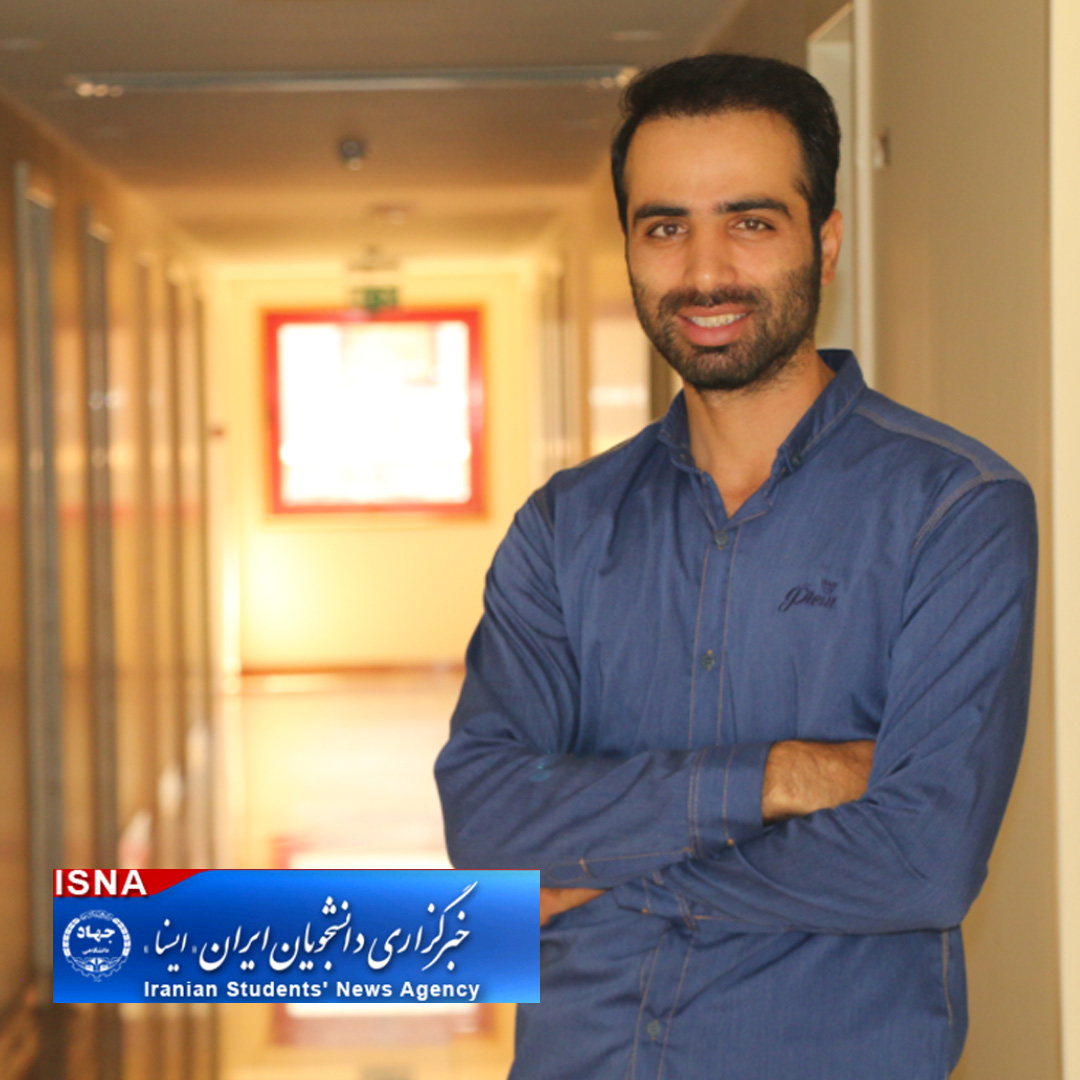
Interview with PhD student of geophysics-seismology Mr Mohsen Ranjbar Hajiabadi on seismic anisotropy and earthquake wave behaviour
A PhD student of geophysics-seismology, Mr Mohsen Ranjbar Hajiabadi, has given an interview to the ISNA News Agency on seismic anisotropy and earthquake wave behaviour.

Joint meeting between IASBS and Zanjan Pars Switch to continue development of scientific and technological cooperation
A joint meeting has been held between the Institute for Advanced Studies in Basic Sciences (IASBS) and Zanjan Pars Switch. The meeting, which took place on 16 February 2026 was hosted by Zanjan Pars Switch and attended by the Chief Executive Officer of the company, Mr Gholamreza Farsaad within the framework of the previous memorandum of understanding and aimed to deepen scientific, research, and technological cooperation between the two sides.
Developed by the IASBS Computer Centre
Number of Views: 0