IASBS
Departments
Department of Physics
Department of Physics
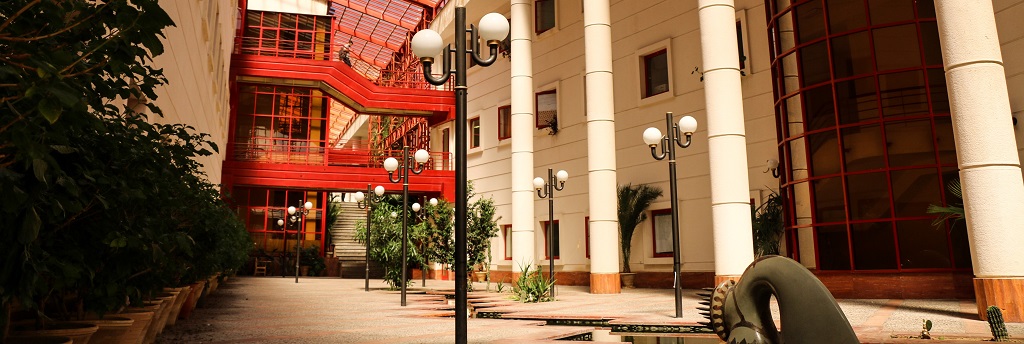
In line with the Institute’s main goal of contributing to progress in the basic sciences, the Physics Department started work as the first IASBS Department with 3 faculty members in the spring of 1993 by admitting students in the MSc Program in Physics. In 1996, the Institute launched its first PhD Program. In 2000, a special continuous-track PhD Program was introduced to admit top school graduates who excelled in the National University Entrance Examination. Students in this 8-year program, after completing both undergraduate and postgraduate coursework, proceed directly to their PhD research, bypassing the MSc dissertation. In 2018, the Department also launched a seamless MSc-PhD Degree Program.
The Physics Department has fostered a dynamic environment for comprehensive postgraduate education and research in physics, with a purely scientific and research-oriented focus. This unique setting is free from the typical distractions found in other universities in the country, offering an atmosphere comparable to that of scientific institutions in developed nation.
The faculty members of the Physics Department are mostly young and active researchers working in various branches of theoretical and experimental physics alongside more experienced members of the Department in close contact with the students. The members of the Physics Department actively participate in international conferences and workshops and collaborate with the international scientific community.
With 34 faculty members and over 300 postgraduate and Continuous-Track students, we conduct cutting-edge research across various branches of physics. Our high faculty-to-student ratio (approximately 1:10) is unique among Iranian universities. Additionally, the Physics Department consistently maintains one of the highest ratios of high-quality, refereed publications per faculty member in the country.
Our activities in the Department of Physics have led to numerous patents commensurate with the domestic needs of the country as well as publications in high quality journals such as Nature, Physical Review Letters, etc. Investigation of various phases of soft matter and biological physics, quantum materials, complex systems, classical and quantum optics, cosmology, and the physics of galaxies are among the main research topics pursued at the Department of Physics. So far, more than 900 MSc and PhD students have been graduated from the Physics Department many of whom are currently continuing their studies or working in world class institutions, bearing testament to the quality of education and research offered at this Department.
Nahid Azimi
nahid.azimi[at]iasbs.ac.ir
Tel: +98 24 3315 2107
Akram Najafloo
a.najafloo[at]iasbs.ac.ir
Tel: +98 24 3315 2117
Fax: +98 24 3315 2104
Masoudeh Abedi
m_abedi[at]iasbs.ac.ir
Tel: +98 24 3315 2116
M.Sc. Defense
Nasrin Khanekeshi - Department of Physics
2026-09-22 11:00
Place: Science House Amphitheater
M.Sc. Defense
Seyedeh Roghayyeh Seyedzadeh - Department of Physics
2026-09-21 16:00
Place: Torkaman Lecture Hall
M.Sc. Defense
Sara Aminian - Department of Physics
2026-09-21 11:00
Place: Science and Technology Park Conference Hall
M.Sc. Defense
Parisa Khani Kouchmeshki - Department of Physics
2026-09-19 15:30
Place: Science House Amphitheater
M.Sc. Defense
Sadaf Ghafar - Department of Physics
2026-09-19 14:00
Place: Torkaman Lecture Hall
Ph.D. Defense
Ali Asghar Janali zadeh Javan - Department of Physics
2026-09-16 11:00
Place: University Amphitheater