Research
Department of Earth Sciences
Department of Earth Sciences
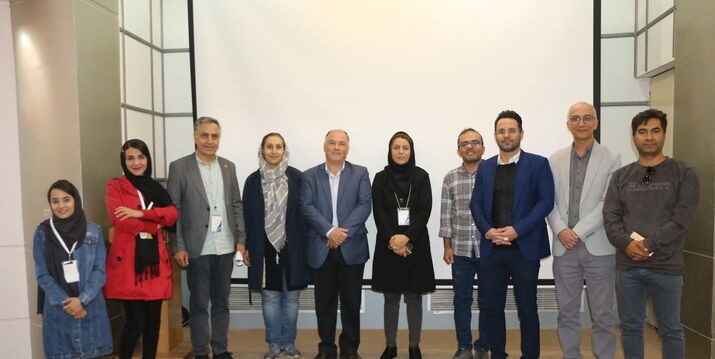
The Department of Earth Sciences focuses on training and research in interdisciplinary Earth sciences. We aim to study all aspects of the Earth sciences, encompassing the Earth’s evolution through geologic time, its internal dynamics and structure, the distribution of mineral and energy resources, the evolution of the Earth’s crust in response to tectonic, magmatic, and sedimentary processes, as well as climate change, hydrogeology, and water resources. The Department hosts five main research groups, Geophysics, Tectonics, Sedimentology, Hydrogeology, and Geological Remote Sensing, that work in close collaboration.
Geophysics is the study of the Earth’s structure through the application of various physical principles. Our activities encompass both practical and theoretical studies supported by field experiments. We are active in geophysical data processing, earthquake seismology, seismic exploration, geodynamics, magnetic prospecting, geodesy, and the Earth’s gravity field.
Our research mainly focuses on two branches:
1. The tectonic evolution and the present-day geodynamics of the Arabia–Eurasia collision/subduction zones developed around the Turkish–Iranian plateau. We use geophysical techniques such as seismic tomography, earthquake location, seismic anisotropy, and gravity and magnetic data to investigate the internal structure of the crust and mantle.
2. Near-surface explorations, including seismic methods (reflection and refraction), gravity and geomagnetic exploration, geoelectric investigation, etc. Investigation areas of near-surface geophysics include engineering, environmental, groundwater, mining, geohazards, and infrastructure applications.
The Sedimentology Group of the Department of Earth Sciences focuses on theoretical, experimental, laboratory, and field-based studies of modern and ancient sediments in various physical, chemical, and biological aspects. Our researchers are active in sedimentology and stratigraphy, palaeoenvironmental changes, sediment provenance, palaeoclimate records in sediments, sedimentation and tectonics, as well as sedimentary basin analysis.
The Structural Geology and Tectonics Group includes experts in petrology and tectonics. Our research primarily focuses on the tectonic evolution and present-day geodynamics of the
Arabia–Eurasia collision/subduction zones, developed around the Turkish–Iranian plateaus.
Tectono-magmatic processes, seismotectonics, variations in crustal stress states, as well as continental deformation and tectonic geomorphology, are among our main interests.
To pursue these studies, we employ a variety of modern techniques, including InSAR, GPS, drone-based very high-resolution (VHR) aerial photomosaics, and DEMs,
as well as magnetostratigraphy, thermochronometry, geochemistry, and radiometric/cosmogenic dating
(from the Palaeozoic to the Holocene). We also collaborate in multidisciplinary teams to investigate fundamental issues in geohazards, geodynamics, and water and mineral resources.
The Hydrogeology Group focuses on water resource management, land subsidence, water and soil pollution, the physical characteristics of groundwater systems, large-scale climate variability, and the possible impact of future climate change on water resources, as well as the hydrogeology of karstic aquifers.
We use modern techniques such as InSAR, machine learning, and near-surface geophysical surveying,
as well as outputs from common climate models such as CMIP5, CMIP6, and GeoMIP,
in collaboration with specialists in remote sensing, geophysics, and information technology.
The group also benefits from a Hydrochemistry Laboratory to measure the physicochemical constituents of water.
The Geological Remote Sensing Group was formed with the cooperation of experts in remote sensing, geophysics, tectonics, and hydrogeology. We investigate topics such as active tectonics and earthquake risk (on both urban and regional scales); water resource management, including the identification, monitoring, and analysis of ground movements in areas affected by subsidence, landslides, and salt domes; flood and fire crises; and environmental issues such as the evaluation of landfills and water and soil pollution using satellite imagery and remote sensing techniques.
Our group is equipped with several high-performance computing servers and a drone for conducting related studies.
Developed by the IASBS Computer Centre