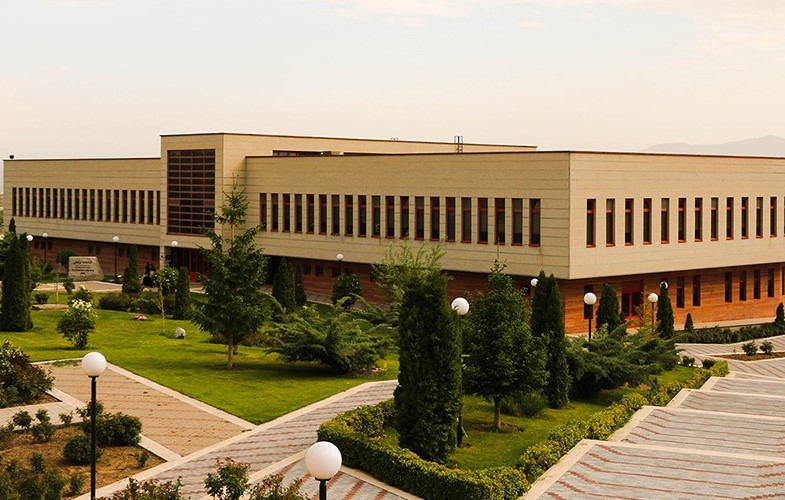
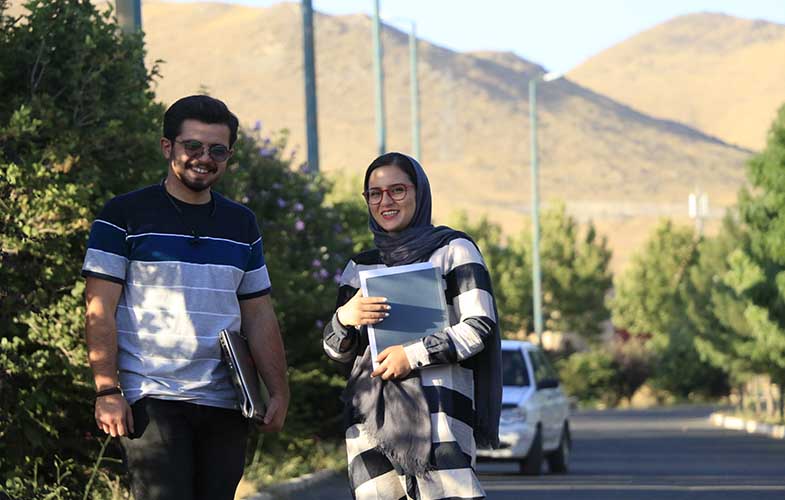
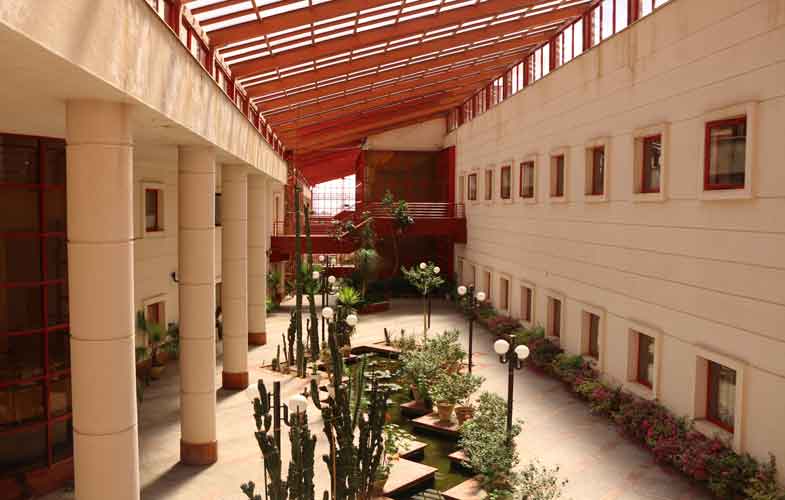
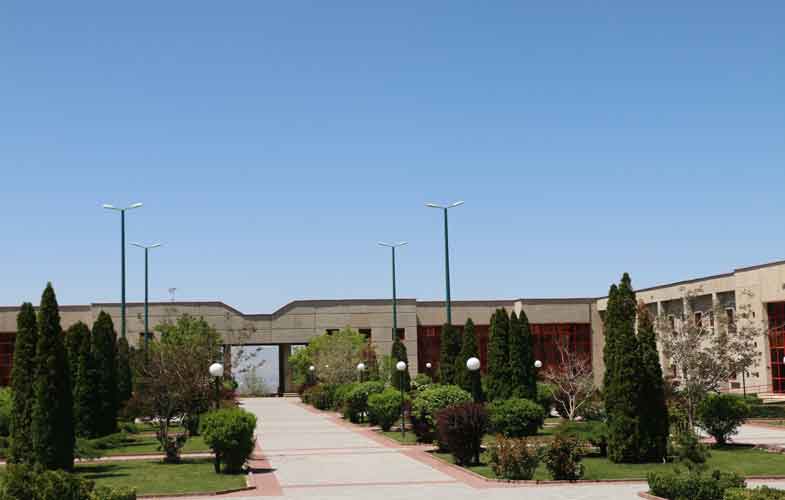
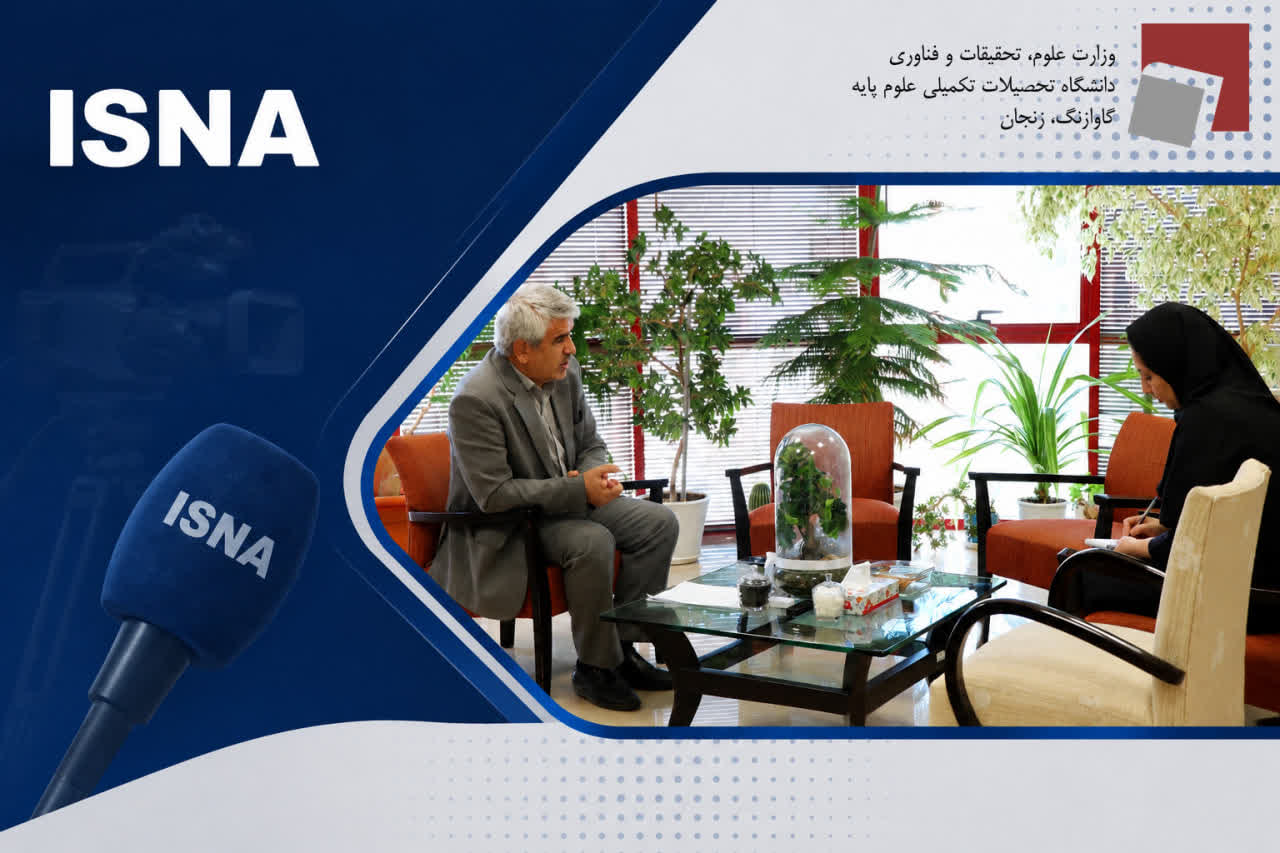
According to the Public Relations Office of the Institute for Advanced Studies in Basic Sciences (IASBS), the IASBS President, Prof Sadollah Nasiri Gheydari, has told the Iranian Students News Agency (ISNA), as the postgraduate programme selection process gets under way, that master’s and doctoral applicants should consider not only their personal interests, but also the research capacities, quality of faculty members, laboratory and research facilities, and career prospects of their chosen field.
He said the Department of Computer Science and Information Technology had capacities in fields including artificial intelligence, data science, the Internet of Things, and intelligent systems. These are among the transformative areas of technology in today’s world, and graduates in these fields can work in knowledge-based companies, research and development centres, smart industries, and technology-based organisations.
Regarding the Department of Mathematics, Prof Nasiri Gheydari said that, in addition to classical areas of mathematics, it was active in fields including financial mathematics, computer science, artificial intelligence, and the theory of computation. He described these as important capacities for addressing emerging research and technological needs.
Referring to the capacities of the Department of Chemistry, the IASBS President said its research in fields including nanotechnology, drug delivery, advanced materials, next-generation batteries, and green technologies sought to strengthen the link between basic sciences and the technologies needed by society and industry. The Department admits students to master’s and doctoral programmes in analytical chemistry, inorganic chemistry, nanochemistry, organic chemistry, physical chemistry, and polymer chemistry. In some specialisms, students can also pursue an integrated PhD.
The IASBS President also said that the Department of Biosciences conducted interdisciplinary research in fields including cancer biology, drug design, bioinformatics, computational biology, stem cells, organoid technology, recombinant vaccines, and neurological diseases. The Department admits students to master’s and doctoral programmes in biochemistry and biophysics.
Prof Nasiri Gheydari described the Department of Earth Sciences as one of the country’s leading scientific centres in this field, saying that its activities in seismology, tectonics, sedimentology, hydrogeology, gravimetry, and remote sensing formed part of the university’s capacity to address issues related to natural hazards, water resources, and the environment.
The IASBS President added that, with 17 faculty members and research published in leading international journals, the Department of Earth Sciences had secured first place among the country’s earth sciences departments in the 2024 Nature Index ranking. He added that the direct-entry PhD in seismology was another distinctive capacity of the Department.
Regarding the Department of Physics, the IASBS President said that, as the university’s first Department to be established, it had more than three decades’ experience in teaching and research. With 34 faculty members, it is active in a range of fields, including astronomy and astrophysics, gravitation and cosmology, optics and photonics, quantum technologies, nanophysics, statistical physics and complex systems, condensed-matter physics, and biophysics.
He added that many of these fields were interdisciplinary in nature and connected with areas including computer science, artificial intelligence, biosciences, medicine, and nanotechnology. As a result, physics graduates can, in addition to continuing their studies, work in fields such as quantum technologies, photonics, aerospace, data science, artificial intelligence, medical equipment, image processing, and scientific software development.
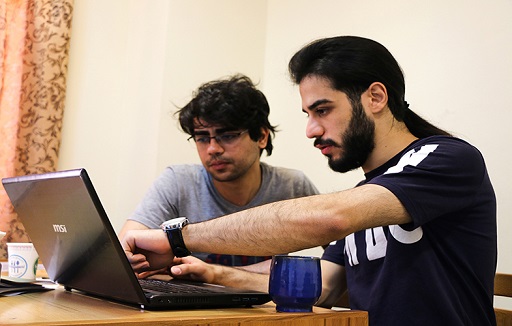
Prof Nasiri Gheydari stressed the university’s research-led nature, saying that students took part in research activities and projects alongside faculty members from the beginning of their studies, and that education at the university was not limited solely to classroom learning.
He said: “Research at the university covers fields including quantum technologies, nanotechnology, drug design, cancer biology, bioinformatics, next-generation batteries, natural hazards, water-resources management, and data science. These fields are at the frontiers of knowledge, while also being connected to the country’s scientific and technological needs.”
The IASBS President also mentioned the possibility of admitting talented students through the Exceptional Talents Regulations, as well as through direct-entry and integrated PhD programmes in some fields. He described these opportunities as a chance for capable students to continue their academic path.
Regarding graduates’ career prospects, he said that basic sciences had developed a deep connection with technology and industry. Graduates of the university can work in universities, research institutes, advanced industries, knowledge-based companies, research and development centres, the pharmaceutical industry, information technology, energy, environmental sectors, and many other innovative fields.
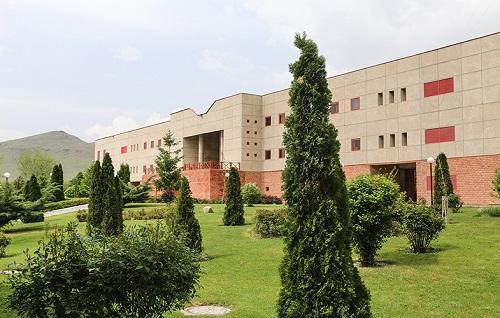
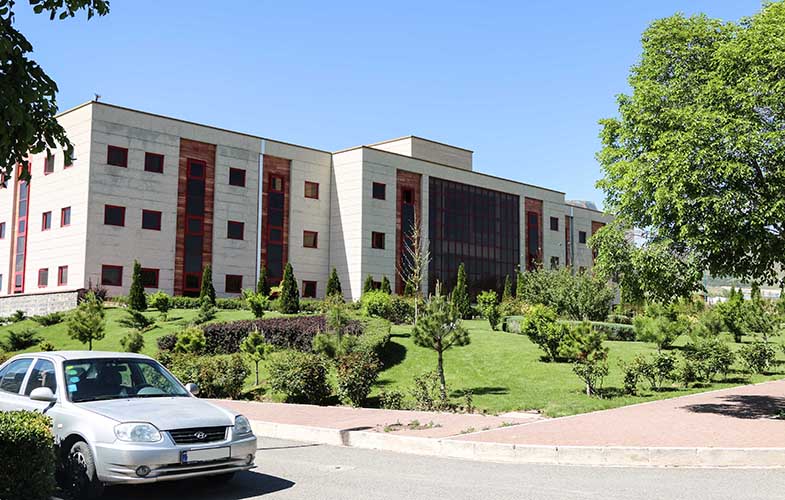
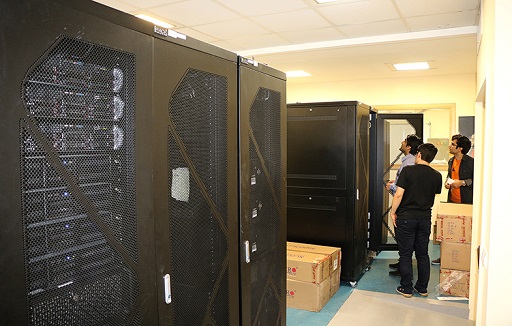
At the end, the IASBS President told applicants choosing a field of study that they should not focus solely on the name of the programme or university. Instead, they should also consider the quality of the academic environment, research capacities, faculty-student relations, facilities and research infrastructure, and the career prospects of the programmes when making their decision.
Prof Nasiri Gheydari added: “Choosing a postgraduate programme is not merely choosing an academic title. It means choosing a future professional and research path. The Institute for Advanced Studies in Basic Sciences (IASBS) has sought to provide a research-led environment with an international outlook, enabling it to train researchers and specialists who can contribute to the development of science and technology in the country.”
Tue, 01 Sep 2026
Developed by the IASBS Computer Centre
IP Address:[216.73.216.183] Browser: Mozilla/5.0 AppleWebKit/537.36 (KHTML, like Gecko; compatible; ClaudeBot/1.0; +claudebot@anthropic.com)