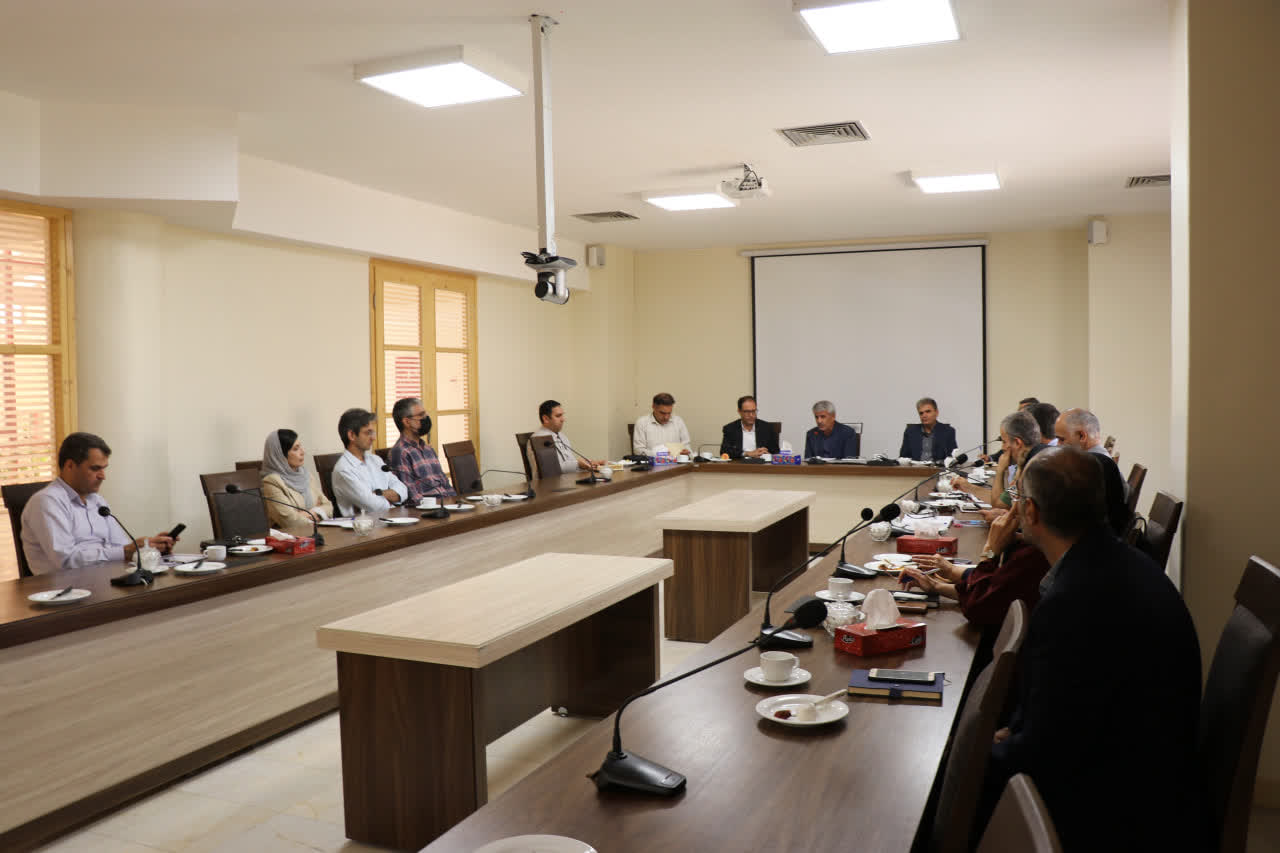
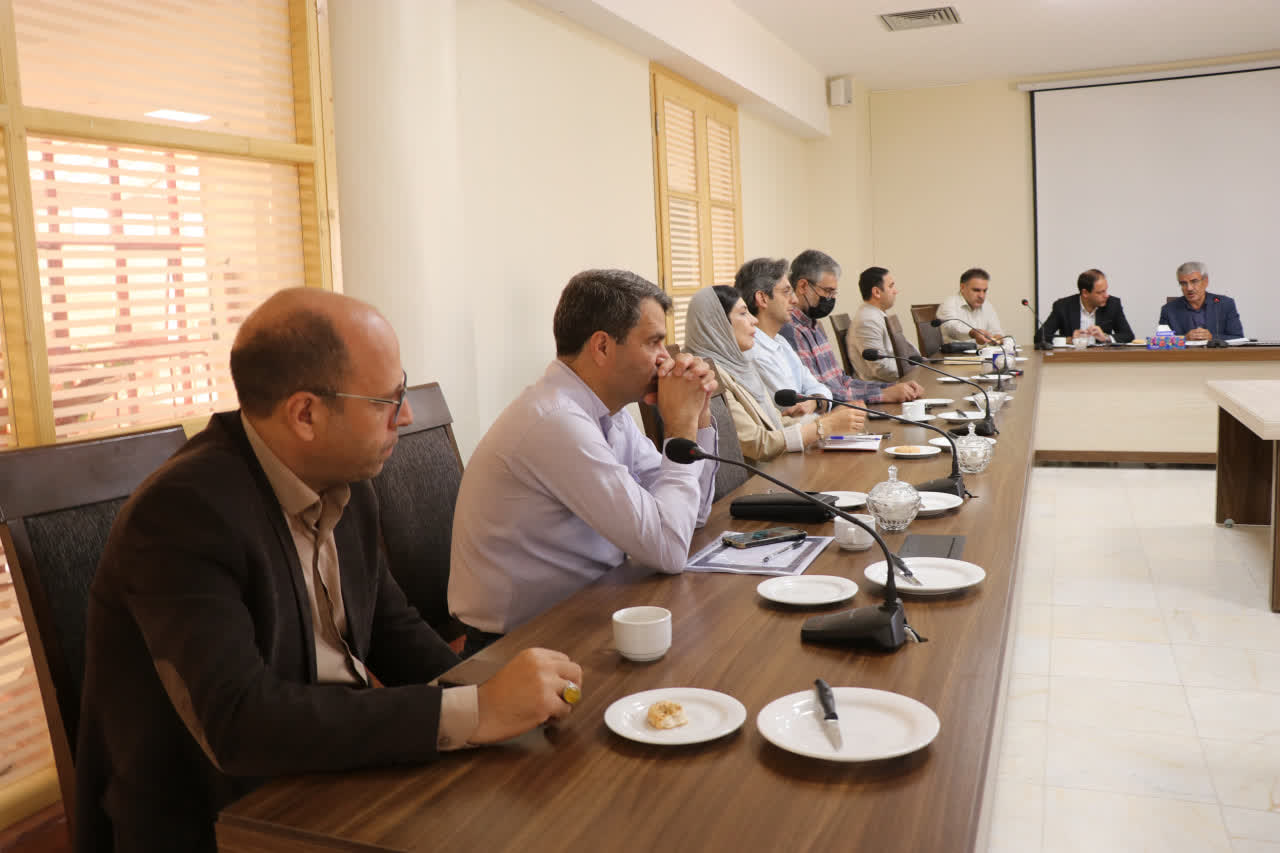
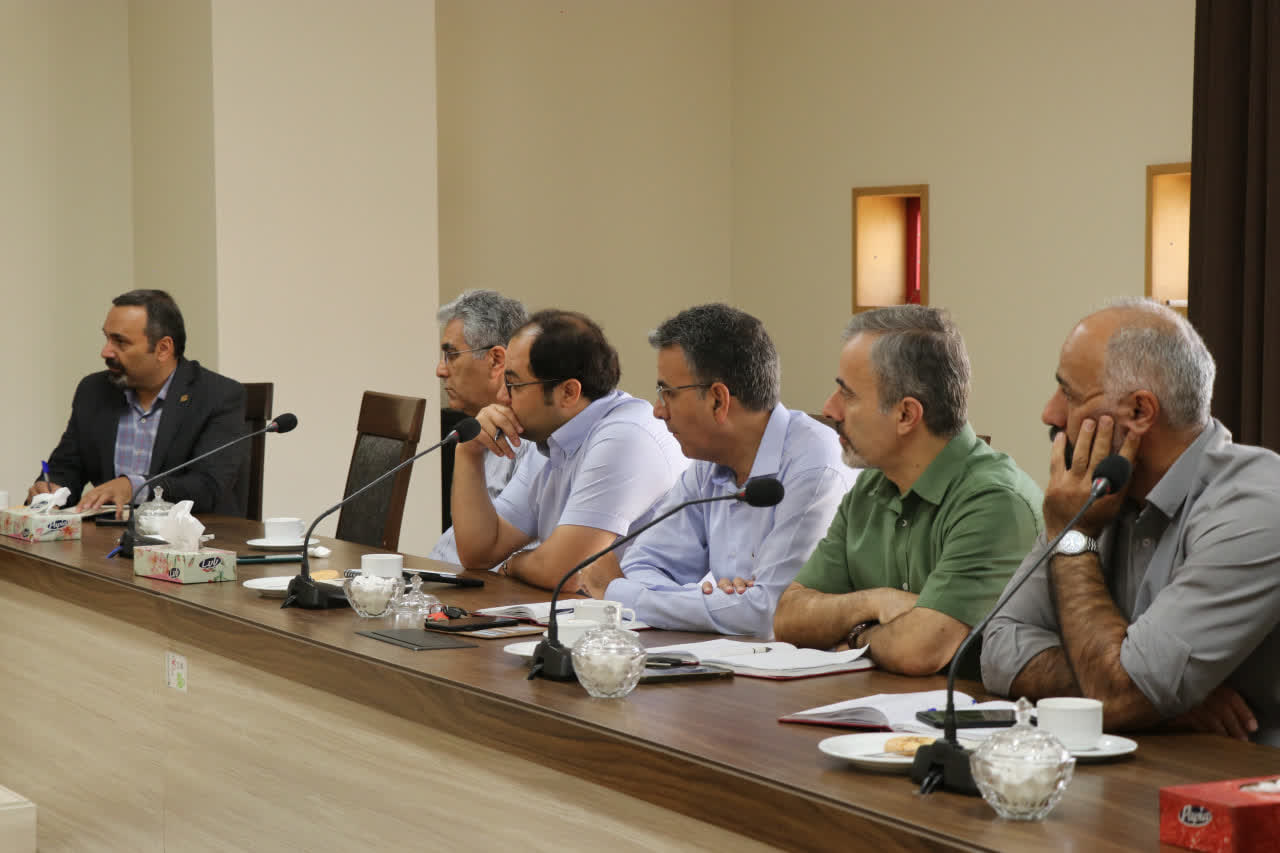
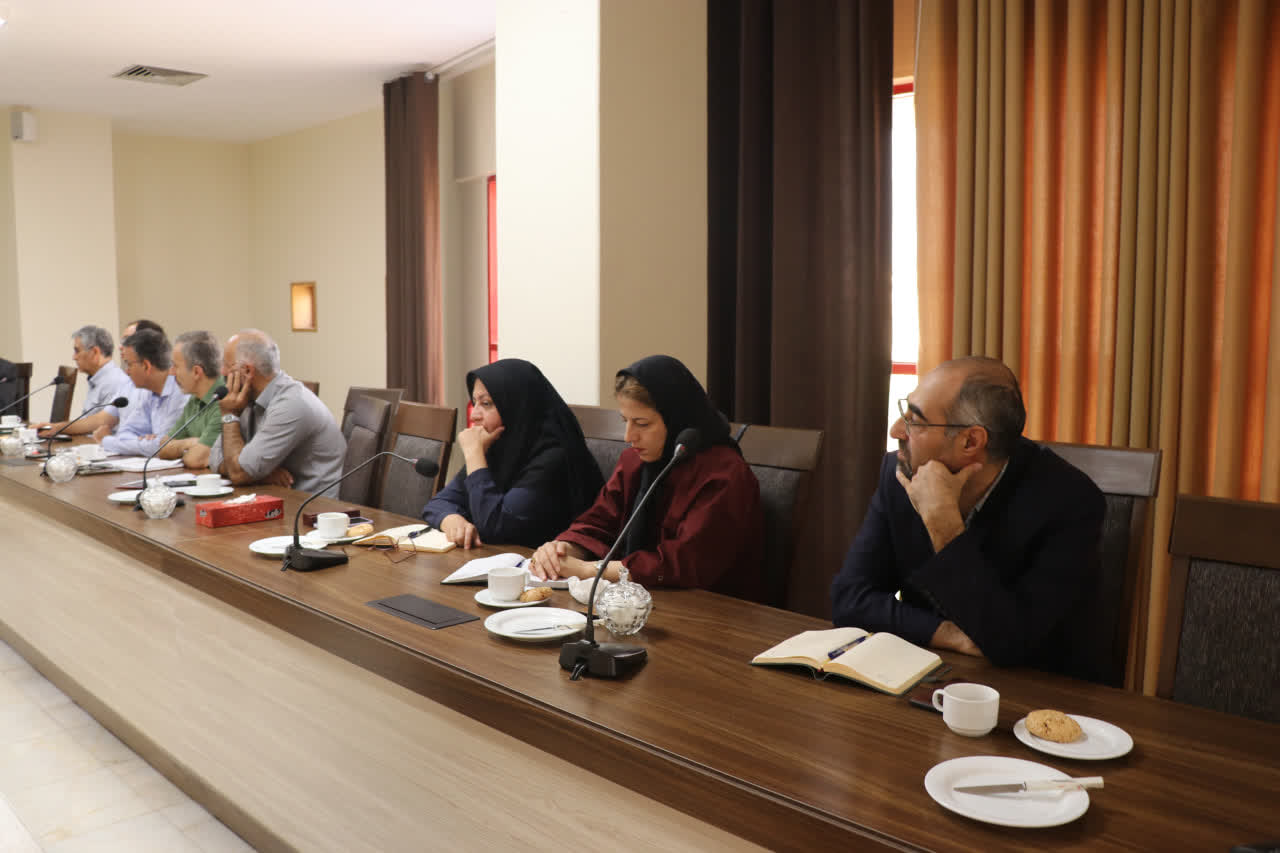
The Board of Governors of the Institute for Advanced Studies in Basic Sciences (IASBS) has held a meeting with the Director General of Industry, Mine and Trade in Zanjan Province, Eng Amir-Ali Mosayyebi. The meeting took place on Monday, 31 August 2026.
At the beginning of the meeting, the IASBS President, Prof Sadollah Nasiri Gheydari, welcomed the guest and members of the Board of Governors, and gave an account of the history of the university’s establishment, its educational, research, and technological capacities, its academic standing nationally and internationally, its academic honours and achievements, and the capabilities of its faculty members.
Referring to the university’s standing among the country’s leading universities, he described its place among the country’s top 10 universities and leading universities as one of its important capacities, and stressed the need to make effective use of this academic and specialist capacity to address the country’s and the province’s issues and needs.
The IASBS President also stressed the importance of interaction and co-operation between the university and executive, industrial, and economic organisations in Zanjan Province, and considered it essential to use the university’s academic, research, and technological capacities to respond to the province’s needs and strengthen university-industry links.
Next, the Director General of Industry, Mine and Trade in Zanjan Province, Mr Amir-Ali Mosayyebi, stressed the need to strengthen links between the university and the industrial and mining sectors, hold regular joint meetings, and make greater use of the academic and specialist capacities of the province’s universities.
He said that links between the university and the industrial and mining sectors could help address many existing needs and challenges, adding that the province’s universities possessed valuable academic and specialist capacities that should be used more extensively to address issues in industry, mining, and production.
Mr Mosayyebi noted gaps between the university and industry, and stressed the need to identify industries’ needs accurately and define joint projects to address them. He said there were numerous areas for co-operation, including the design and manufacture of components, simulation, localisation, and the domestic production of equipment and components required by industries.
Mr Mosayyebi also pointed to the IASBS’s capacities in emerging scientific fields, particularly artificial intelligence, and described the use of this expertise across the industrial and mining sectors as an important area for developing joint co-operation. He welcomed the expansion of these links.
The Director of the University’s Industrial Liaison Unit, Dr Amin Abdollahi, then pointed to the existing opportunities under the research and development tax credit scheme and stressed the need to facilitate industries’ use of them. He proposed that, to develop joint co-operation and facilitate industries’ use of the tax credit, the ground should be laid for concluding a tripartite memorandum of understanding among the Institute for Advanced Studies in Basic Sciences (IASBS), the Provincial Directorate General of Industry, Mine and Trade, and the Provincial Directorate General of Taxation. He also proposed that related issues should be publicised across the province.
Dr Abdollahi also identified the monitoring and testing of pesticides and agricultural products as another area in which co-operation could be developed. He stressed the possibility of using the IASBS’s capabilities in this field and its role as a reference laboratory. He also said that the university’s capacities could be used in areas related to the Ministry of Industry, Mine and Trade, including quality assessment, and the control and evaluation of products and related processes.
The Head of the IASBS Science and Technology Park, Dr Abbas-Ali Zamani, pointed to the opportunities provided by the Knowledge-Based Production Leap Law, describing the use of these opportunities as a need of the province’s industrial community. He stressed the need for industries to become more familiar with the provisions of the law.
Dr Zamani described the holding of various outreach and training meetings as a way to introduce the opportunities provided by the Knowledge-Based Production Leap Law and enable industries in the province to make more effective use of them.
Dr Zamani also identified the smartening of industries as another mission of the IASBS Science and Technology Park, and announced the park’s readiness to co-operate with industries in the province to make better and greater use of the capacities offered by smart technologies and other emerging technologies.
Next, the Vice-President for Administration, Finance, Education, and Research, Prof Rashid Zaare-Nahandi, pointed to the university’s standing as a leading institution in research and technology, and stressed the need to define a clear role for the university in co-operation with the industrial sector. He proposed that, under a joint memorandum of understanding, the university could serve as a scientific and specialist advisory group on industries’ needs, and on technical and research issues.
At the end of the meeting, with emphasis on the need to maintain interaction between the university and the province’s industrial and executive sectors, a proposal was put forward and discussed to conclude a tripartite memorandum of understanding among the Institute for Advanced Studies in Basic Sciences, the Directorate General of Industry, Mine and Trade of Zanjan Province, and the Directorate General of Taxation of Zanjan Province. The aim would be to develop scientific and specialist co-operation, make use of the opportunities provided by the Knowledge-Based Production Leap Law and the research and development tax credit scheme, and support research and technological projects.
The meeting also stressed the need to identify the technological and research needs of industries, define joint projects, use the university’s laboratory and specialist capacities, develop smart industries, and hold regular specialist meetings between the university and the province’s industrial and executive organisations.
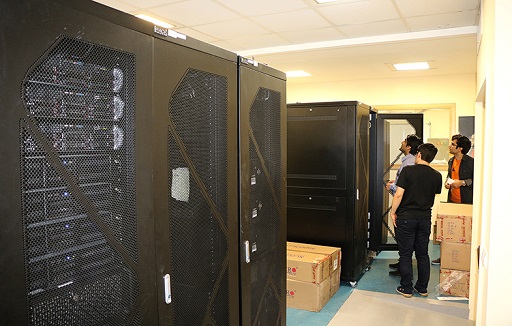
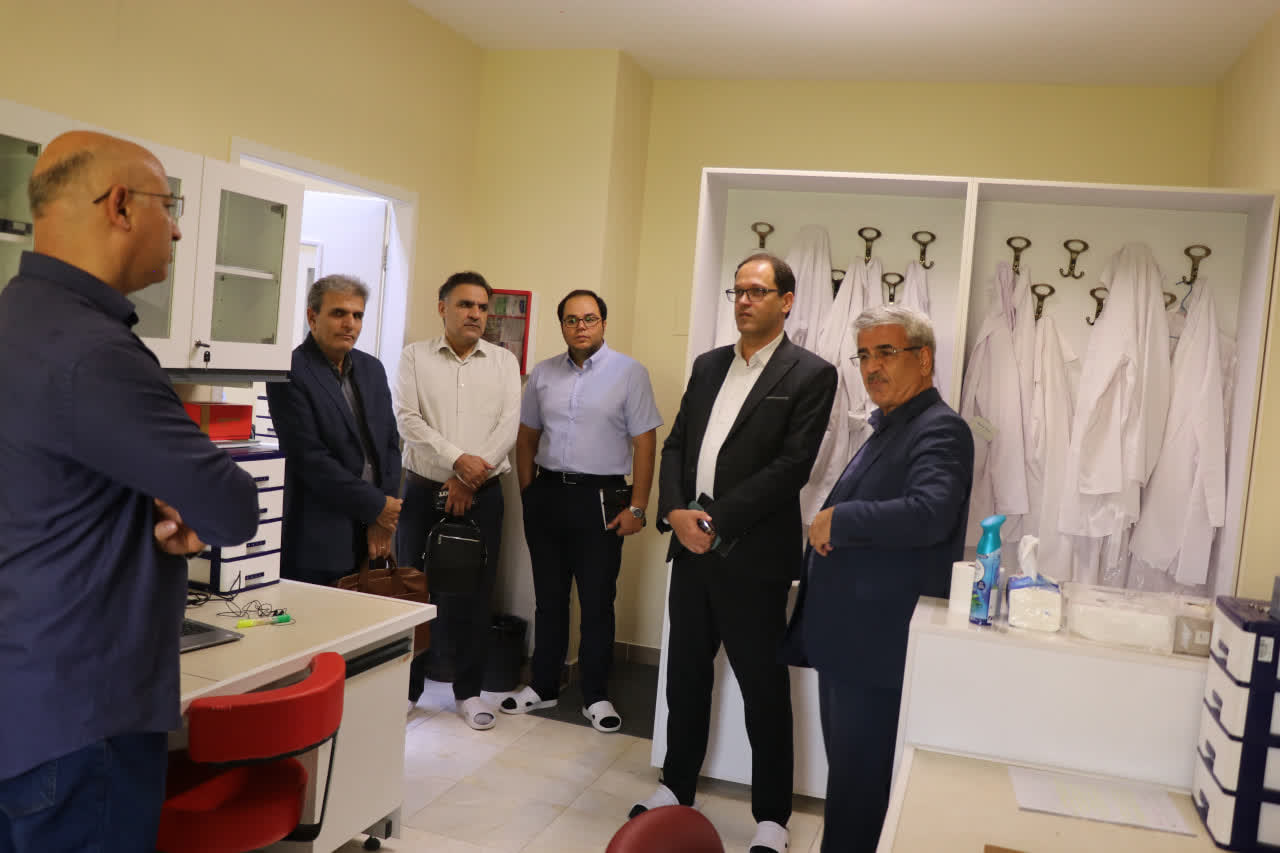
The Amir-Alam Ghazanfarian Electronic Materials Laboratory was then visited, and explanations were provided about the laboratory’s areas of activity, research achievements, and academic and specialist capacities.
Tue, 01 Sep 2026
Developed by the IASBS Computer Centre
IP Address:[216.73.216.47] Browser: Mozilla/5.0 AppleWebKit/537.36 (KHTML, like Gecko; compatible; ClaudeBot/1.0; +claudebot@anthropic.com)