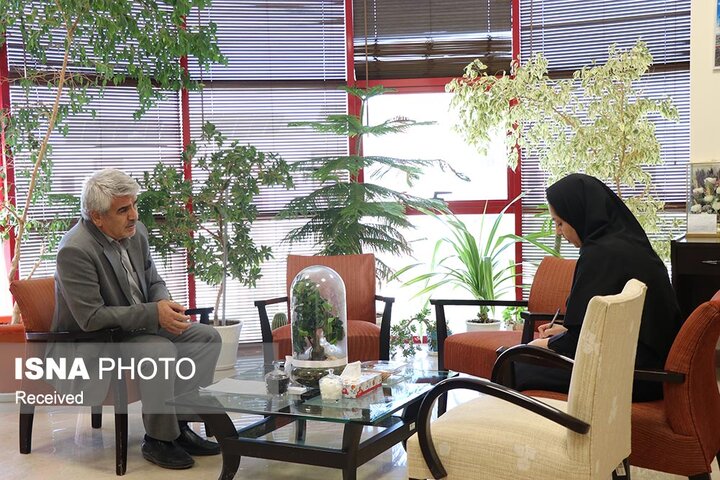
The IASBS President, Prof Sadollah Nasiri Gheydari, has highlighted the necessity of informing the public about the university's performance. In an interview with ISNA, he stated that the public is interested in the performance of the institute and its role in the scientific development of the province, and from this perspective he would like a performance report of the university to be presented through the media every six months or annually.
Pointing to the university’s performance since October 2025, he clarified that the Institute for Advanced Studies in Basic Sciences (IASBS) is considered one of the top universities in the country due to its quality indicators. This university ranks first in some indicators, is among the top five universities in others, and is also in the group of the country's outstanding universities in a number of indicators. This, he said, was confirmed during the recent visit of the Minister of Science, Research, and Technology.
Prof Nasiri Gheydari continued by saying that the IASBS has about 1,000 students in Master’s and PhD programmes. In the PhD area, three educational routes, including the Continuous-Track PhD, Direct PhD, and Discontinuous PhD, are offered at the university. The Continuous-Track PhD was launched for the first time in the country simultaneously at the IASBS and Sharif University of Technology (Sharif University discontinued the programme the following year), and entails school-leaving students doing undergraduate and postgraduate studies until they obtain their PhD degree. Direct PhD is a seamless MSc-PhD programme, and Discontinuous PhD is the normal PhD programme.
The IASBS President considered innovation to be one of the important indicators of the university, and added that this university had always been innovative in the fields of education, research, and technology, and would continue this path in the future.
Stating that about 3,700 individuals have graduated from this university so far, Prof Nasiri said IASBS graduates were serving inside and outside the country in reputable and well-regarded institutions.
Describing the infrastructure measures at the university, he said we have tried to keep the macro policies of the government, especially the Seventh Development Plan, in mind. In the energy sector and in response to the current energy imbalance, we have built a 115-kilowatt solar power plant and connected it to the national grid. Furthermore, a 50-kilowatt power plant has been launched, another 50-kilowatt power plant is under construction, and an independent solar power plant has also been established at the university's “Science House”.
Pointing to the success of the university's Science House in winning the award of the Science Promotion Association of the country, Prof Nasiri added that the university's Science House is the first house of science in the country to succeed in receiving this award at the national level.
Pointing further to the university's measures in the field of water resources management, he said that by implementing modern irrigation systems, managing water consumption, growing low-water-consuming plant species, and promoting the culture of protecting water resources, the Institute for Advanced Studies in Basic Sciences has presented itself as the first "water-friendly university" in the country.
The IASBS President, Prof Sadollah Nasiri Gheydari, clarified that all water taps in the dormitories and university buildings have been equipped with smart sensors to prevent water wastage. Moreover, he said, the Water and Environment Innovation Centre has been launched to provide scientific and technological solutions in the field of water resources management, environment, and combating climate change.
He went on to announce the start of construction of the married students' dormitory with a physical progress of 35 to 40 per cent, and added that the Social Innovation Centre has been launched in cooperation with the Rouzbeh Charity Institute, and the permit for the Specialized Training Centre has also been obtained from the university's Board of Trustees, and its activities have begun.
The IASBS President also announced plans for the launch of the university's investment organisation based on Article 14 of the Law on Surge in Knowledge-Based Production, and said that this legal article is considered to be one of the very valuable capacities for universities and has provided the possibility of establishing university investment organisations.
In another part of his speech, Prof Nasiri pointed to the scientific and research achievements of the university, and said that three faculty members of the university have been placed on the list of the world's top one per cent of highly cited researchers, which indicates the prominent scientific position of the university at the international level.
The IASBS President added that Dr Shiva Akbari Mirkani has succeeded in receiving a fellowship from the Alexander von Humboldt Foundation of Germany, which is considered one of the most prestigious institutions supporting research activities in the world. In the past nine months, he said, one faculty member has been promoted to the rank of professor, and five faculty members have been promoted to the rank of reader (associate professor).
Prof Nasiri further said that in line with developing scientific, research, and technological cooperation, we have signed a joint cooperation memorandum with the Islamic World Science Citation and Monitoring Institute (ISC). This memorandum was signed in the presence of the head of this institute, Dr Alavian-Mehr, and its goal is to expand scientific, research, and technological cooperation and implement joint projects.
Pointing to the holding of numerous scientific meetings and conferences at the institute, Prof Nasiri said the 10th Regional Climate Change and Global Warming Conference had been held recently. Some of the planned meetings and conferences, he said, were postponed because of the country’s special conditions and developments resulting from the imposed war. He added that in this scientific and regional conference, which was held with the presence of national officials and prominent researchers, the role of universities in facing climate challenges and providing scientific solutions for managing these challenges was emphasised.
Regarding the institute’s research achievements in the past nine months, the IASBS President said that the institute’s faculty members have published 209 scientific articles in this period, 63 per cent of which were published in the first quartile journals and about 20 per cent in the second quartile journals. In other words, about 83 per cent of the institute’s articles are in the first and second quartiles, which shows the high quality of the institute’s research activities.
Prof Nasiri Gheydari then pointed to the institute’s efforts in developing technology and innovation, and in establishing relations with the industry saying that joint collaborations with large industries of the province, including the Iran Transfo Industrial Group and Pars Switch Zanjan Company, have started in the field of research and development. Also, scientific, research, and technological collaborations with some industries outside the province have been pursued and have brought favourable results.
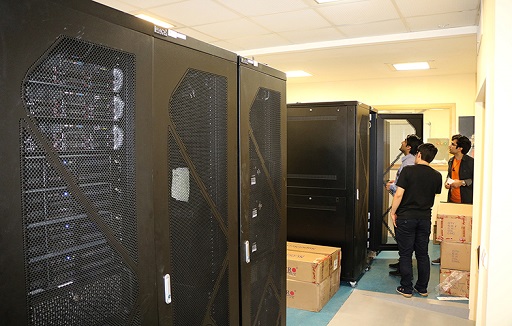
He added that the university’s Digital Transformation Research Institute had also been launched after obtaining the necessary permits from the university’s Board of Trustees. He said he was very optimistic about the future of this research institute, and that its management was in the hands of one of the young, capable, and internationally recognised members of the university, Dr Masoumi.
He noted that the goal of launching this research institute is to create a platform for the development of new technologies, implementation of technological projects, and expansion of interaction between the university and the industry by utilising the capacities of digital transformation and artificial intelligence.
Referring to the institute’s cultural and social activities and its social responsibility, the IASBS President, Prof Sadollah Nasiri Gheydari, stated that social responsibility hads received special attention by the Ministry of Science, Research and Technology in recent years. In addition to previous actions, such as launching the Autism Children’s Park, the institute has implemented a free cancer screening plan in the past nine months in cooperation with the Mehraneh Charity Association.
The IASBS President said a tree-planting ceremony had been held in memory of martyred students and pupils, and the university’s Earth Sciences building was named after Martyr Dr Seyyed Jaaber Ghaffari, one of the institute’s martyred students in the war. This ceremony was held in the presence of the Minister of Science, Research and Technology and a group of provincial officials in line with promoting the culture of sacrifice and martyrdom.
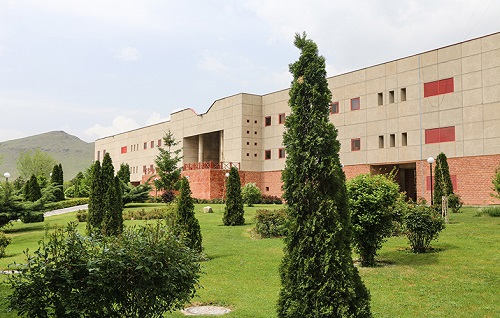
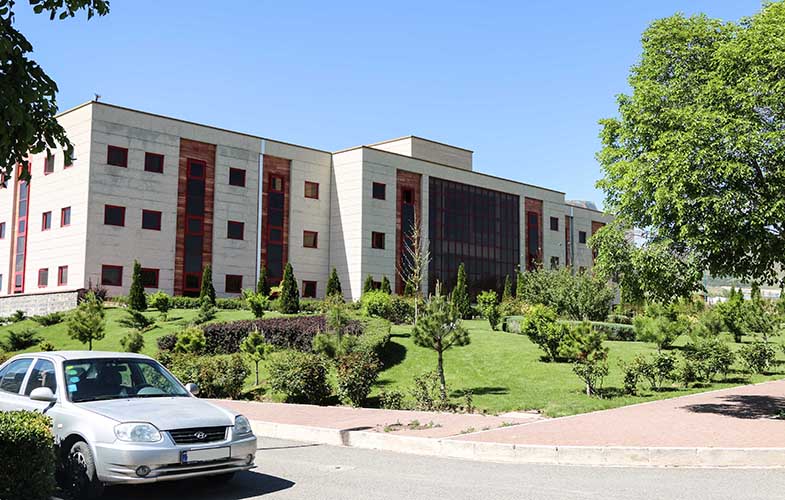
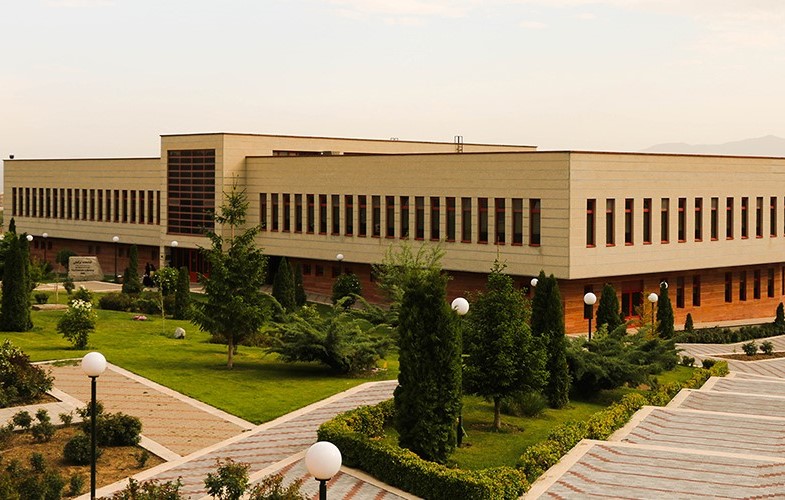
In describing the actions taken to improve the institute’s position, the IASBS President said that stabilising the institute’s position among the country’s top universities, maintaining and improving its rank in international scientific and research indicators, introducing the institute’s capacities in national media in cooperation with provincial and national radio and television, as well as the opening of the Biology Department building, were among these steps.
Answering a question on the quality of virtual education during the country’s special conditions, he stated that virtual education should not be compared with in-person education. He said the importance of virtual education is that, under conditions where it is not possible to hold in-person classes, it acts as a valuable alternative to prevent the institute from closing.
He added that the experience of the COVID-19 pandemic had also shown that if virtual education did not exist, universities would have been forced to close completely. He said at that time he had been the Chancellor of Shahid Beheshti University in Tehran, and had observed how virtual education had prevented the waste of students’ time and suspension of higher education.
Emphasising that in-person education is superior to virtual education in terms of quality, the IASBS President said that as soon as the necessary conditions for the students’ presence had been attained, the Institute for Advanced Studies in Basic Sciences was one of the first universities that gradually resumed in-person education for various intakes, provided dormitories to students, and reactivated transportation services. Despite financial and economic restrictions and existing debts to contractors, Prof Nasiri said, we tried to provide the necessary facilities for the students’ presence.
He said we therefore ask students to make the most of this short opportunity for in-person education, because the main principle is learning, and the exams and tests are secondary. If, he added, the main goal is learning, the students and lecturers can improve the level of education with cooperation and empathy. On this basis, as soon as the necessary permits were issued by the competent authorities, the institute started the necessary measures to return to in-person education.
The IASBS President, Prof Sadollah Nasiri Gheydari, said he had been in constant contact with the students, their representatives, his vice-presidents, managers, and other university officials, and had made decisions in an interactive and consultative atmosphere to implement what was in the best interest of the students and the institute in a responsible manner.
Prof Nasiri said the faculty members had also been asked to take into account the necessary considerations in evaluations and educational programmes, given that a large part of the term had been held virtually. Students were also asked to take advantage of the existing opportunities to increase learning so that they would, in the future, be able to offer their services to the society as specialised, educated, and capable individuals.
Mon, 22 Jun 2026
Developed by the IASBS Computer Centre
IP Address:[216.73.217.122] Browser: Mozilla/5.0 AppleWebKit/537.36 (KHTML, like Gecko; compatible; ClaudeBot/1.0; +claudebot@anthropic.com)